











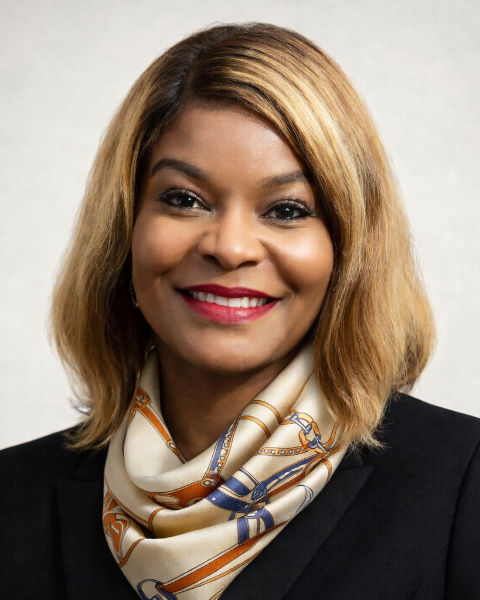
BridgeBio’s dedication to rare disease patients now has a new home in DC. The company officially opened its District office on September 15, marking a major stride in bringing research, advocacy, and regulatory engagement into closer collaboration. As Adora Ndu, Pharm.D., J.D., explained, “We had an opening. We had a couple of patients and patient advocates from the limb girdle muscular dystrophy community, and that is one of the diseases where we are developing a treatment.”
The event also honored leaders from the Limb Girdle Muscular Dystrophy (LGMD) community, many of whom had traveled to DC for Capitol Hill meetings that same week. Their presence reflected BridgeBio’s embedded patient‑centered philosophy.
A Company Built Around Patients
LGMD, a progressive rare genetic disease, causes patients to gradually lose their ability to walk and can lead to breathing and cardiac complications. “Many of them end up becoming wheelchair bound or just having lots of complications in life, and so we're developing a treatment for that,” Ndu said. BridgeBio’s product for LGMD is currently under FDA review.
The timing of the office opening aligned with the LGMD community’s annual advocacy day on Capitol Hill, where 70 community members, including several in wheelchairs — met with lawmakers. “This community has been so impactful in D.C. just with their advocacy on Capitol Hill for treatment because there are no treatments approved for their disease,” Ndu shared.
BridgeBio honored two LGMD advocates at the event by naming a conference room after them, a continuation of a company tradition. At headquarters, all major spaces are named after patients who have shaped BridgeBio’s mission. “One of our conference rooms, we dedicated to a patient who is no longer with us, unfortunately… a young girl who died at the age of six years old. She had a disease called Canavan disease, where we are developing a gene therapy,” Ndu said.
Her family attended the dedication. “We played some of the videos we’ve captured of her over the years, and it was a very special moment to remember the commitment that patients give and the struggles they go through.”
Why Washington, D.C.?
BridgeBio’s decision to establish a presence in the nation’s capital was strategic and intentional. “It allows us a space to convene our patients, convene our staff, convene policymakers,” Ndu explained. “It allows us a closeness to the work that we need to do with regulators and policymakers, and just the ability to really engage and drive change forward in the area of rare disease.”
The DC office brings together patients, federal partners, and scientific experts — creating a central hub for addressing the systemic obstacles that slow rare disease progress.
Confronting the Challenges of Rare Disease Drug Development
Rare disease research is notoriously difficult because patient populations are so small. “Just to give you a little bit of background, we were founded in 2015, and our first approved product was in a rare disease where at the time there were only 400 kids globally that we were aware of,” Ndu said. “It’s very difficult to enroll a trial, do the research, find the outcomes, and then get the approval.”
More than 10,000 rare diseases affect over 30 million Americans, yet over 95% have no treatment. That is the landscape BridgeBio aims to change.
“Most of these diseases don't have a treatment because they're difficult to research, they're difficult to understand the root cause, they're difficult to diagnose,” Ndu explained. That’s why the company works closely with patient groups and the FDA: “We try to help educate on the challenges so that the regulatory framework is shaped in a way to enable development to continue forward.”
What Success Looks Like in Year One
For the DC office, success won't be measured by a single event or milestone. “In its first year, success really looks like being able to pull together our stakeholders here in this space to talk about some of the important issues that are rate‑limiting and impacting the advancement of treatments for rare diseases,” Ndu said.
The opening event already embodied that vision. “We had our CEO here. We had our board members here. We also had the folks who work out of this D.C. office, and the patient group,” she noted. “Our office opening went really well.”
A Long‑Term Commitment to Patients
At its core, the DC office is an extension of BridgeBio’s patient‑first culture. As Ndu put it, “The innovation in this space — a lot of companies are not involved in rare genetic diseases because it's hard. This is really hard science.”
But difficulty does not deter BridgeBio. It defines their purpose. “The patients’ voices are directly influencing the work coming out of this office,” Ndu emphasized. “It grounds us in why we’re here.”